What Defines a High-Performance Tire Curing Envelope? Material & Manufacturing Standards
In commercial precure tire retreading, a curing envelope’s service life and vacuum reliability come down to two core factors: elastomer purity and precision molding craftsmanship. Inferior envelopes made with blended or reclaimed rubber quickly harden, crack at splice lines, and cause trapped-air defects during vulcanization.
Below are the four engineering hallmarks that distinguish a premium, high-cycle curing envelope from standard market alternatives.
1. High-Purity Butyl Rubber Formulation
The foundation of any long-lasting curing envelope is its rubber compound. Top-tier envelopes are formulated from high-purity butyl rubber (IIR) engineered specifically for repeated autoclave exposure:
• Superior Thermal & Tear Resistance: Butyl maintains its tensile strength and high-temperature tear resistance across continuous curing cycles at 100°C to 140°C (212°F–284°F) without reverting or becoming brittle.
• Efficient Heat Transfer & Flex Fatigue Life: Dense molecular uniformity delivers consistent thermal conductivity across the tread face while withstanding hundreds of pneumatic expansion and contraction cycles without losing elasticity.
2. Seamless Compression Molding (Zero Splice Lines)
Traditional extruded or spliced envelopes feature bonded joints that act as natural weak points inside the curing chamber.
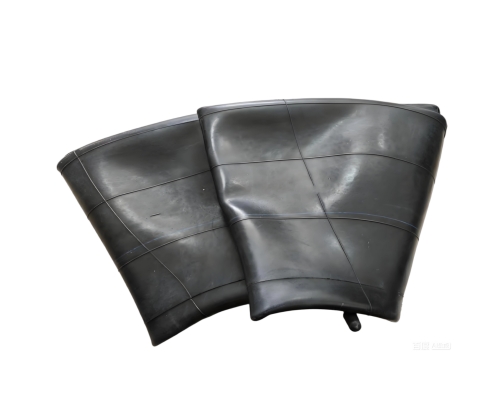
• One-Piece Molded Construction: Premium curing envelopes are produced via full-mold seamless compression, forming the entire sleeve as a single continuous unit with zero welds or lap splices.
• Eliminating Joint Splits: Without splice seams to separate under repeated thermal expansion and vacuum tension, seamless envelopes resist premature splitting and deliver dramatically higher cycle counts.
3. Embossed Internal Air-Evacuation Grid (Wickless Design)
Trapped air between the envelope and the uncured tread rubber causes blistering, porosity, and poor tread-to-casing adhesion.
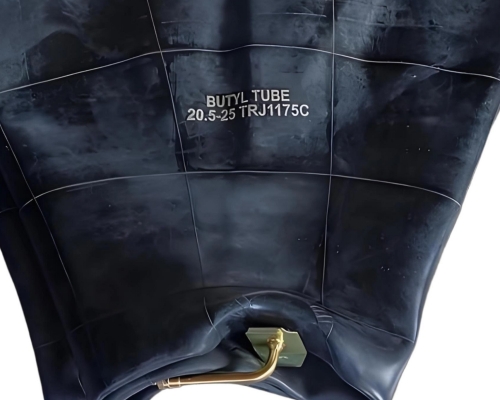
• Precision Micro-Grid Channels: High-grade curing envelopes feature a molded embossed grid pattern across the interior surface. When vacuum is applied, these interconnected micro-channels rapidly evacuate air from the entire tread crown toward the vacuum valve.
• Lower Consumable Costs: Because the embossed inner grid handles airflow directly, retreading plants can eliminate—or drastically reduce—the use of expensive disposable air-wicking pads/fabrics, cutting both material costs and tire preparation labor.
4. Reinforced High-Stress Zones (Valve Base & Bead Edges)
Field failures on curing envelopes overwhelmingly occur at the mechanical stress points where vacuum hardware meets the rubber or where the envelope seals against the tire.
• Thickened Valve Anchor & Sealing Lips: Quality manufacturers engineer extra rubber gauge and contoured reinforcement around the vacuum valve base and bead/edge sealing profiles. This prevents edge tearing during aggressive mounting and demounting, ensuring an airtight vacuum seal cycle after cycle.